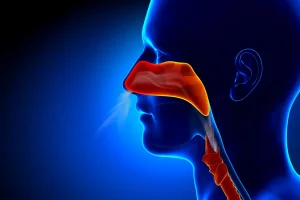
Adenoid vegetation
Difficulty breathing? Snoring in your child? It could be due to adenoids.
Home » ENT-Surgery » Adenoid vegetation
Conditions Treated
- Sept Deviation
- Nasal Obstruction
- Benign and Malignant Nodules and Tumors
- Obstructive Sleep Apnea
Medical Procedures
ENT Surgery
Rhinosinus Surgery
- Radiofrequency Turbinoplasty
- Functional and Aesthetic Reconstruction

Does your child snore at night, breathe through their mouth, or seem constantly tired, even after sleeping? These seemingly trivial signs may hide a common problem in young children: enlarged adenoids. Left untreated, they can affect your child’s sleep, development, and even hearing.
Find out how to detect them, what treatment options are available, and when surgery is necessary.
Book an Appointment
What are adenoids?
Adenoid vegetation, commonly known as “polyps” are lymphoid formations located in the upper part of the pharynx, behind the nose. They are part of the immune system and are normally present in children, but can become problematic when they hypertrophy (grow in volume).
When are investigations for adenoid vegetation indicated?
Assessment of adenoid vegetation is recommended in the following situations:
- Mouth breathing, especially at night;
- Snoring or breathing pauses during sleep (apnea);
- Frequent ear infections (recurrent otitis);
- Chronic rhinitis or persistent sinusitis;
- Sleep disturbances and daytime fatigue;
- Nasal speech or hearing difficulties.
How is the diagnosis made?
The diagnosis of adenoid vegetation is made through:
- Pediatric ENT consultation;
- Anterior and posterior rhinoscopy;
- Nasal endoscopy (the most accurate method);
- Audiometric examination or tympanogram, in case of suspected fluid accumulation in the middle ear (serous otitis).
What treatments are available?
Treatment for adenoids may include:
Conservative (medication) – recommended for mild cases
- Corticosteroid nasal sprays;
- Antihistamines (if there is an allergic component);
- Nasal irrigation with saline solution or sea water;
- Treatment of associated infections (antibiotics, if indicated).
Surgical (adenoidectomy) – recommended for moderate/severe cases
- Snoring and sleep apnea;
- Recurrent ear infections with hearing impairment;
- Permanent mouth breathing and feeding/sleeping difficulties;
- Speech or orofacial development disorders.
How does the adenoidectomy procedure work?
- The procedure is performed under general anesthesia, on an outpatient basis or with a short hospital stay;
- The procedure takes 15-30 minutes on average;
- Classic or modern methods are used (aspiration, radiofrequency, coblation);
- Recovery is quick, and the child can return to normal activities within a few days.
Postoperative recommendations
- Rest at home for 2-3 days;
- Light diet, at room temperature;
- Avoid intense physical activity for one week;
- ENT check-up after 7-10 days.
Schedule an ENT consultation
If you notice these signs in your child, schedule an ENT consultation for a complete evaluation. With a correct diagnosis and appropriate treatment, your child can breathe and sleep peacefully again!
Medical Team
Frequently Asked Questions
At what age can adenoids appear?
Usually between 2 and 7 years of age, but they can persist into adolescence.
Is recurrence possible after surgery?
Rarely, the growths may reappear, especially if the procedure was performed at a very young age.
Does the operation affect the immune system?
No. Other lymphoid structures (palatine tonsils, lymph nodes) take over the defense function.