Proctology: Consultations and Minimally Invasive Treatments
Consultations, diagnostic tests, and minimally invasive treatments in Cluj-Napoca: anal fistula, anal fissure, hemorrhoids.
Home » Proctology: Consultations and minimally invasive treatments
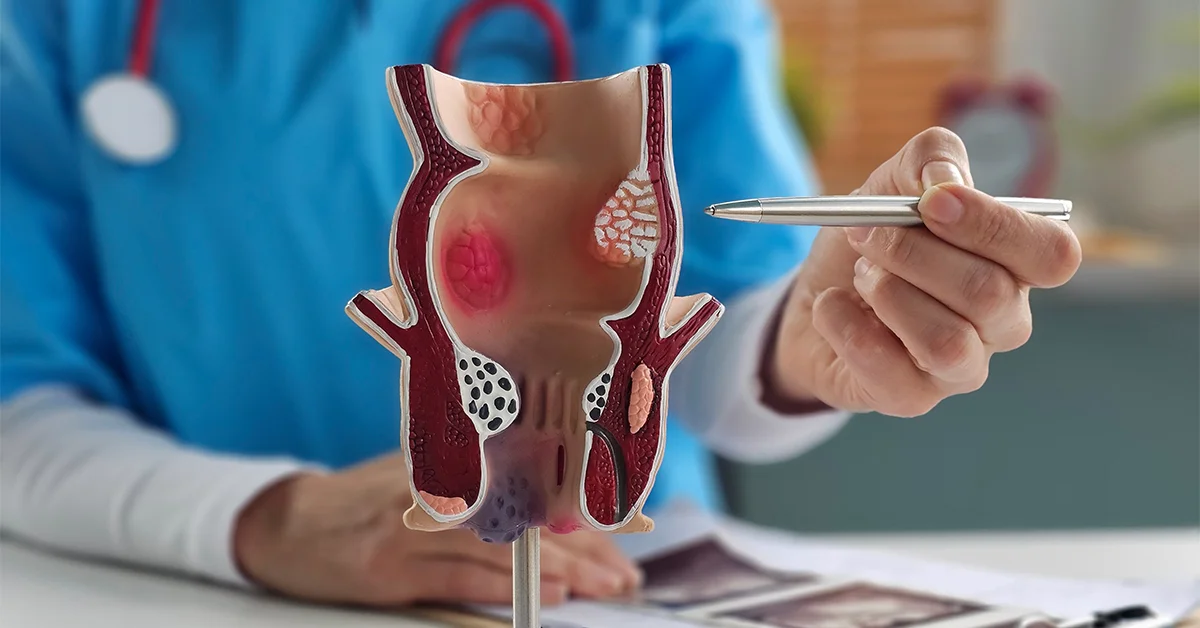
Proctology at the VenArt Clinic in Cluj-Napoca offers consultations, diagnostic tests, and minimally invasive treatments for conditions affecting the anal and rectal areas. If you’ve been experiencing bothersome symptoms for some time but have put off seeing a doctor out of embarrassment or fear, you’ve come to the right place. Proctological conditions are common and treatable, and the earlier they’re detected, the easier they are to resolve.
Book an Appointment
What is proctology, and what does it involve?
Proctology is the medical specialty that deals with the diagnosis and treatment of conditions affecting the anus, anal canal, and rectum. In short: a proctologist treats everything related to the anal area, from inflammation and injuries to growths and functional disorders.
Many people put off seeing a proctologist for months or even years. The reasons are usually embarrassment, fear of pain, or the hope that the symptoms will go away on their own. In reality, most proctological conditions are effectively treatable, especially when detected early.
Who needs a proctology consultation?
Anyone experiencing symptoms in the anal area should see a specialist. There’s no need to wait until the symptoms become unbearable. A prompt consultation can make the difference between a simple treatment and a complex procedure.
Warning signs: When should you see a proctologist?
Your body sends you clear signals when something is wrong. Here are the symptoms that require a proctological consultation:
- Anal bleeding during bowel movements or on toilet paper;
Persistent anal pain, especially when walking or sitting;
Chronic itching or irritation in the anal area;
Unpleasant-smelling discharge in the perianal area;
A sensation of pressure or a foreign body in the anal area;
Visible swelling or redness around the anus;
Changes in bowel habits that persist for more than a few weeks.
If you experience one or more of these symptoms, don’t put it off. A proctology exam is quick, discreet, and much less uncomfortable than you might think. Schedule an appointment.
Proctological conditions treated at the VenArt Clinic
At VenArt Clinic, we treat the most common proctological conditions using modern, minimally invasive methods. Each patient is evaluated individually, and the treatment plan is tailored to the specific condition and the unique details of each case.
Anal fistula: minimally invasive laser treatment
An anal fistula is an abnormal channel that forms between the inside of the anus and the surrounding skin. It most often occurs after a perianal abscess and causes pain, discharge, and persistent discomfort. Without treatment, it does not go away on its own.
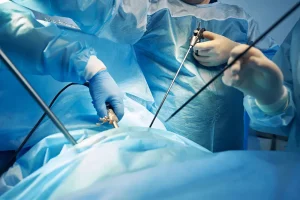
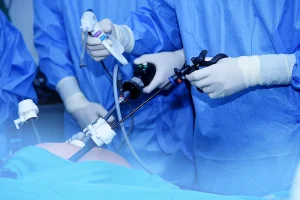
At VenArt Clinic, anal fistulas are treated with laser therapy: a minimally invasive method that requires no large incision and allows for a quick recovery.
Anal fissure: minimally invasive laser treatment
An anal fissure is a small tear in the lining of the anus that is extremely painful, especially during and after a bowel movement. It is one of the most common proctological conditions and often occurs due to constipation or hard stools.
An acute fissure can be treated with local therapy, but a chronic fissure, one that persists for more than 6 weeks, requires specialized intervention. At VenArt Clinic, anal fissures are treated with laser therapy, without incisions or sutures.
Internal and external hemorrhoids: modern treatment
Hemorrhoids are swollen blood vessels in the anal and rectal area. They are extremely common and can cause bleeding, itching, pain, and discomfort during bowel movements. Many people live with these symptoms for years without realizing that there are quick and effective solutions.
At VenArt Clinic, hemorrhoids are treated using minimally invasive, modern methods tailored to each individual case.
Why choose minimally invasive treatment instead of traditional surgery?
Many patients come to their appointments fearing that they will need surgery and that recovery will be long and painful. In reality, modern methods of proctological treatment completely change this perception.
Type of intervention:
Laser treatment:
No incisions, laser-guided
Minimally invasive treatment:
Small incisions, no large cuts
Traditional surgery:
Open, with large incisions
Accuracy:
Laser treatment:
Very high
Minimally invasive treatment:
High
Traditional surgery:
Standard
Hospitalization:
Laser treatment:
Same-day
Minimally invasive treatment:
Usually on the same day
Traditional surgery:
1–2 days
Postoperative pain:
Laser treatment:
Minimal
Minimally invasive treatment:
Reduced
Traditional surgery:
More invasive
Resumption of activities:
Laser treatment:
In a few days
Minimally invasive treatment:
In a few days
Traditional surgery:
After a few weeks
Scars:
Laser treatment:
No scars
Minimally invasive treatment:
No scars
Traditional surgery:
Possible scars
Minimally invasive treatment does not mean it is less effective. It means that the patient experiences less discomfort and returns to normal life more quickly.
Fear of a proctology exam: what you need to know
This is why many patients put it off. Fear of pain, embarrassment in front of the doctor, or the belief that “it will go away on its own.” We understand. But let us be clear: a proctology exam is quick, discreet, and much less uncomfortable than you might imagine.
The proctologist is used to these situations and treats every patient with professionalism and empathy. There’s no reason to feel embarrassed. There’s only a reason to resolve a problem that affects your quality of life every day.
A few things to keep in mind before your appointment:
- The consultation usually lasts 20 to 30 minutes;
- The physical examination is quick and conducted with the utmost discretion;
- You will leave with a clear diagnosis and a personalized treatment plan;
- No special preparation is needed for a routine consultation.
What happens during a proctology consultation at the VenArt Clinic?
Many patients don’t know what to expect, which is why they put it off. Here’s what a proctology consultation at the VenArt Clinic looks like, step by step:
- Appointment: by phone or via the online form, quick and easy, with no waiting lists;
- Consultation with the doctor: discuss your symptoms, medical history, and any questions you may have;
- Physical examination: quick, discreet, and painless in most cases;
- Additional tests: if necessary, the doctor may recommend an endoanal ultrasound or anoscopy;
- Treatment plan: you leave with a clear diagnosis and treatment options explained in a way you can understand.
Treatments available in the proctology department
At VenArt Clinic, minimally invasive proctological treatment addresses the most common anal and rectal conditions. We invest in modern methods because we know our patients need good results and a quick recovery.
- Laser treatment for anal fistula;
- Laser treatment for anal fissure;
- Minimally invasive treatment for internal and external hemorrhoids;
- Routine and emergency proctological consultations.
Each case is evaluated individually. There is no one-size-fits-all treatment; rather, a solution tailored to each patient.
Why choose VenArt Clinic for proctological treatment?
At VenArt Clinic in Cluj-Napoca, our surgeons with international experience offer consultations, diagnostic tests, and minimally invasive procedures with a quick recovery. Every patient matters, every case is analyzed individually, and every treatment decision is made with care and professionalism.
There are no long waiting lists. There are no generic answers. There are doctors who listen to your problem and offer you the right solution.
Medical team
Frequently Asked Questions About Proctology
Does a proctological exam hurt?
Generally speaking, no. A routine physical exam is quick and discreet. If further testing is needed, your doctor will explain in advance what to expect and how it will be done.
How long does a proctological exam take?
A routine consultation lasts between 20 and 30 minutes. If additional tests are needed, the appointment may take a little longer.
At what age should I see a proctologist?
There is no minimum or maximum age. Proctological conditions can occur at any age. If you have symptoms, regardless of your age, make an appointment.
Can all proctological conditions be treated with minimally invasive procedures?
Most common proctological conditions, such as anal fistulas, anal fissures, and hemorrhoids, can be treated using minimally invasive techniques. There are complex cases where traditional surgery remains the best option, but your doctor will clearly explain which approach is right for you.
Can proctological conditions worsen if left untreated?
Yes. An untreated acute fissure can become chronic. An untreated perianal abscess can develop into an anal fistula. Untreated hemorrhoids can progress to stages that are more difficult to treat. Seeking early medical attention always makes a difference.