Anal fistula: laser treatment (minimally invasive)
The minimally invasive solution for treating anal or perianal fistula
Home » Proctology: Consultations and minimally invasive treatments » Anal fistula: laser treatment (minimally invasive)
An anal fistula is an abnormal channel that forms between the inside of the anus and the surrounding skin. It most often develops following a perianal abscess and causes pain, discharge, and significant discomfort in daily life. At the VenArt Clinic in Cluj-Napoca, we treat anal fistulas with laser therapy: a modern, minimally invasive method that protects the anal sphincter and allows for a faster recovery compared to traditional surgery.
Book an Appointment
What is an anal fistula, and why doesn't it go away on its own?
An anal fistula, also known as a perianal fistula or anorectal fistula, is an abnormal passageway connecting the anal canal to the surrounding skin. In short: a small, abnormal tunnel that shouldn’t be there.
Most often, it develops after a perianal abscess has drained, but the tract has not completely closed. Without treatment, an anal fistula persists for months or years, with recurrent discharge, episodes of infection, and discomfort that seriously affects quality of life.
Causes and risk factors
The most common cause of anal or perianal fistulas is an infection of the anal glands, followed by the formation of a perianal abscess. In other cases, anal fistulas may develop in the context of inflammatory bowel diseases, particularly Crohn’s disease, infections, or other local inflammatory processes.
Factors that increase the risk of developing anal fistulas:
- History of anal abscess;
- Previous anal surgeries;
- Inflammatory bowel diseases (Crohn’s disease, ulcerative colitis);
- Recurrent local infections.
Symptoms of an anal fistula
Symptoms can range from mild to persistent and bothersome. The most common symptoms are:
- Anal pain, especially when walking, sitting, or having a bowel movement;
- Swelling and redness around the anus;
- Discharge of pus, blood, or foul-smelling secretions;
- Local irritation and persistent itching;
- Recurrent episodes of inflammation or abscesses.
The persistence of these symptoms is a clear sign that a surgical consultation is needed. Delayed treatment can lead to complications and recurrences.
How is the diagnosis made?
The diagnosis is made through a specialist consultation and a local clinical examination. When necessary, the doctor may recommend additional imaging tests.
What types of tests are used?
The most commonly used diagnostic tests are transanal ultrasound and pelvic MRI. These tests accurately show the course of the fistula, its relationship to the anal sphincter, and any branches. These details are essential for selecting the most appropriate treatment.
Why choose laser treatment for anal fistula?
Traditional anal fistula surgery involves a wide opening of the fistula tract. This results in a larger wound, slower healing, and, in complex cases, a higher risk of damage to the anal sphincter.
Laser treatment aims to close the fistula tract from the inside, with minimal damage to healthy tissue and a focus on preserving continence.
The main advantages of laser treatment over traditional surgery:
- Less postoperative pain;
- Short hospital stay, usually one day;
- Return to normal activities within a few days;
- Lower risk of damage to the anal sphincter;
- No large surgical incision.
How is laser treatment performed?
Before the procedure, the patient undergoes a clinical and imaging evaluation to determine the exact type of fistula and the optimal treatment strategy.
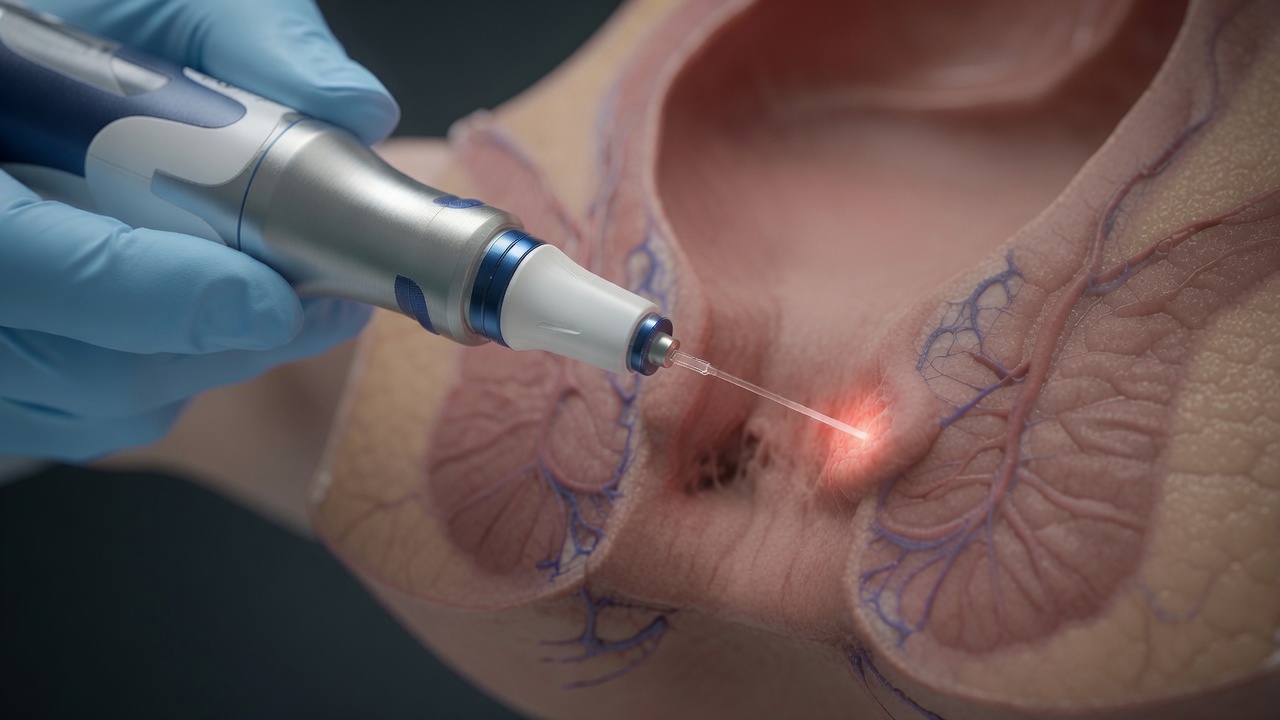
During the procedure, after the fistula tract has been prepared, the laser fiber is inserted into it, and the emitted energy causes the channel to coagulate and close.
In some cases, laser treatment may be combined with other complementary surgical procedures, depending on the complexity of the fistula and the presence of an active infection.
Recovery after laser treatment
Recovery is generally faster than after traditional open surgery. The patient can resume light activities within a few days after the procedure.
For complete healing without complications, the following are important:
- Proper local hygiene, as directed by the doctor;
- Avoiding constipation through a proper diet;
- Attending recommended follow-up appointments to monitor healing.
Other treatment options for anal fistula
There are several treatment options, and the choice depends on the course of the fistula, its relationship to the sphincter, and the patient’s medical history. The surgeon is the one who recommends the appropriate option for each individual case.
Classic fistulotomy
What it involves:
Complete opening of the fistula.
Limitations:
Larger wound, slower recovery.
Advantages:
Standard method, effective in certain cases.
Seton
What it means:
Controlled drainage of the path.
Limitations:
May require additional steps.
Advantages:
Useful in infection control.
Advancement flap
What it involves:
Closing the internal opening with local tissue.
Limitations:
More complex technique.
Advantages:
Protects the sphincter in some cases.
Laser treatment
What it involves:
Coagulation and closure of the pathway from within.
Limitations:
Requires proper case selection.
Advantages:
Minimally invasive, faster recovery.
Why choose VenArt Clinic in Cluj-Napoca?
At the VenArt Clinic in Cluj-Napoca, each patient is evaluated individually before any therapeutic decision is made. Our internationally experienced surgeons analyze the type of fistula, the patient’s medical history and preferences to recommend the most appropriate treatment.
Consultations, investigations and minimally invasive interventions, available quickly, without long waiting lists.
Medical team
Frequently asked questions
What is anal fistula?
An anal fistula is an abnormal channel between the inside of the anus and the surrounding skin, often occurring after a perianal abscess. It causes pain, discharge, and persistent discomfort.
Does laser treatment hurt?
The procedure is performed under anesthesia. Postoperative discomfort is generally less than after classic open surgery.
How long does recovery take?
Light activities can be resumed within a few days. Complete healing is monitored through periodic check-ups, recommended by the attending physician.
Is there a risk of relapse?
Yes, any method of treating anal fistula may have a risk of recurrence, especially in complex forms. Correct evaluation and choosing the right technique helps reduce this risk.
How much does laser treatment for anal fistula cost?
The cost of the procedure depends on the complexity of the fistula and the investigations required before the procedure. Call us to determine the next steps together.