Anal fissure: laser treatment (minimally invasive)

The minimally invasive solution for treating chronic or recurrent anal fissures.

Medical Conditions

Woman with anal discomfort, symptoms associated with proctological conditions, laser treatment at the VenArt Clinic in Cluj-Napoca and Bucharest

An anal fissure is one of the most painful proctological conditions. It is a small tear in the lining of the anus that causes intense pain and bleeding, especially during or after a bowel movement. At the VenArt Clinic in Cluj-Napoca and Bucharest, chronic or recurrent anal fissures can be treated with laser therapy: a modern, minimally invasive method that allows for significantly faster recovery compared to traditional surgery.

What is an anal fissure, and why doesn't it go away on its own?

An anal fissure is a tear or lesion in the mucous membrane lining the anal canal. In short: a small but extremely painful wound that most often occurs due to hard stools or excessive straining during bowel movements.

There are two main types:

  • Acute anal fissure: occurs suddenly and can heal within a few weeks with conservative treatment, local hygiene, and dietary changes.
  • Chronic anal fissure: persists for more than 6 weeks, does not respond to local treatment, and requires specialized medical intervention.

A chronic fissure does not heal on its own. The longer you delay treatment, the deeper the fissure becomes and the harder it is to treat.

Causes and risk factors

An anal fissure occurs when the lining of the anal canal is subjected to more strain or pressure than it can withstand. The most common causes are:

  • Constipation and hard stools, which cause straining and tear the lining;
  • Chronic diarrhea or repeated episodes of diarrhea;
  • Vaginal childbirth, in women;
  • Spasm of the internal anal sphincter, which reduces local blood flow and slows healing;
  • Inflammatory bowel diseases, such as Crohn’s disease.

Spasm of the anal sphincter is a significant factor: it reduces blood flow to the area and hinders the natural healing of the fissure, even in acute cases.

Symptoms of an anal fissure

An anal fissure has clear, easily recognizable symptoms. The most common ones are:

  • Intense anal pain during bowel movements and for up to several hours afterward;
  • Bright red blood on toilet paper or on the surface of the stool;
  • A burning or stinging sensation in the anal area;
  • Persistent local itching;
  • Painful anal spasm after a bowel movement;
  • Sometimes visible as a small cut or ulceration around the anus.

If you’ve been experiencing these symptoms for more than a few weeks, it’s time to see a specialist. Don’t put it off: chronic fissures are harder to treat than acute ones.

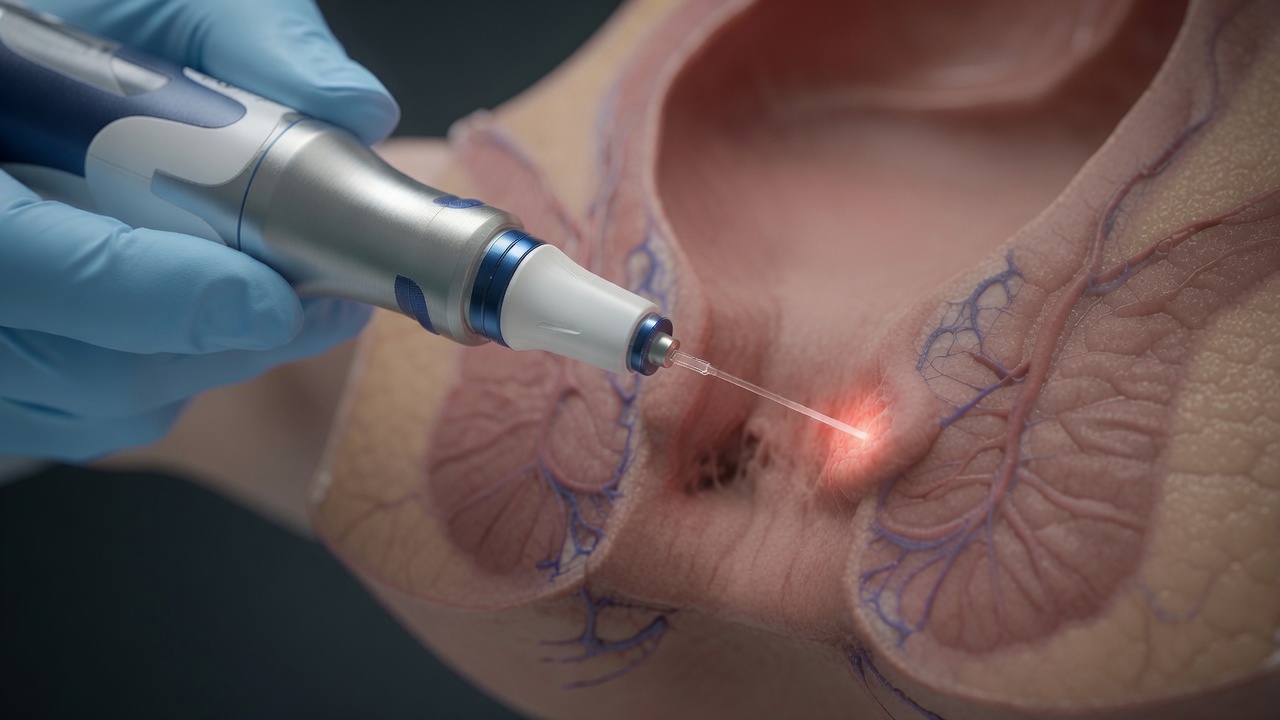
Anatomical illustration of the anal canal: anus, sphincter muscles, and venous plexus, VenArt Clinic in Cluj-Napoca and Bucharest.

How is the diagnosis made?

The diagnosis is made through a specialist consultation and a local clinical examination. In most cases, the anal fissure is visible to the naked eye upon inspection of the perianal area.

What types of tests are used?

In complex cases or when a related condition is suspected, the doctor may recommend additional tests, such as an endoanal ultrasound or anoscopy. These help to accurately assess the anal sphincter and rule out other proctological conditions.

Why choose laser treatment for an anal fissure?

Traditional surgery for anal fissures involves an incision in the internal sphincter, resulting in a surgical wound that takes time to heal and carries a risk of temporary anal incontinence in some cases.

Laser treatment acts precisely, using controlled thermal energy that relaxes the anal sphincter and stimulates healing of the affected tissue, without large incisions or extensive scarring.

Laser treatment versus traditional surgery:

  • Less postoperative pain;
  • Short hospital stay, usually one day;
  • Return to normal activities within a few days;
  • Lower risk of anal sphincter damage;
  • No large surgical incision;
  • Minimally invasive procedure.

How is laser treatment performed?

Before the procedure, the patient undergoes a clinical evaluation to determine the type of fissure and the optimal treatment strategy.

Steps of the procedure:

  1. Initial consultation and clinical evaluation;
  2. Local anesthesia, ensuring patient comfort;
  3. Precise application of laser energy to the affected area;
  4. Relaxation of the anal sphincter and stimulation of tissue healing;
  5. Same-day discharge in most cases.

The entire procedure generally takes between 20 and 45 minutes. There are no incisions, no sutures, and no visible scars after healing.

Recovery after laser treatment

Recovery is significantly faster than with traditional open surgery. Most patients resume light activities within a few days after the procedure.

For a complete and complication-free recovery, the following are important:

  • Proper local hygiene, as directed by your doctor;
  • A high-fiber diet to prevent constipation;
  • Adequate daily hydration;
  • Avoiding strenuous physical activity in the first few days;
  • Attending the follow-up appointments recommended by your doctor.

Other treatment options for anal fissures

There are several treatment options, and the choice depends on the type of fissure, the duration of symptoms, and the patient’s medical history. The surgeon will recommend the most appropriate option for each case.

Conservative treatment

What it involves:

Diet, ointments, and topical baths.

Limitations:

Does not work on chronic fissures.

Advantages:

Non-invasive, effective for acute fractures.

Botulinum toxin (Botox)

What it involves:

An injection to relax the sphincter.

Limitations:

Temporary effect; may need to be repeated.

Advantages:

Minimally invasive.

Classic sphincterotomy

What it involves:

Surgical incision of the internal sphincter.

Limitations:

Risk of temporary incontinence.

Advantages:

High efficiency.

Laser treatment

What it involves:

Precise thermal energy, without a large incision.

Limitations:

Requires careful case selection.

Advantages:

Minimally invasive, quick recovery.

Why choose the VenArt Clinic in Cluj-Napoca?

At VenArt Clinic, each patient is evaluated individually before any treatment decision is made. Our internationally experienced surgeons analyze the type of fissure, medical history, and the specifics of each case to recommend the most appropriate treatment.

Consultations, diagnostic tests, and minimally invasive procedures are available quickly, without long waiting lists.

Frequently Asked Questions About Anal Fissures and Laser Treatment

What is an anal fissure?

An anal fissure is a small tear in the lining of the anal canal that causes severe pain and bleeding, especially during bowel movements. It can be acute or chronic.

Acute fissures can heal within a few weeks with topical treatment and dietary changes. Chronic fissures, which persist for more than 6 weeks, require specialized medical care.

The procedure is performed under local anesthesia. Postoperative discomfort is generally much less than with traditional open surgery.

Light activities can be resumed a few days after the procedure. Full recovery is monitored through regular follow-up visits recommended by your doctor.

Yes, an anal fissure can recur, especially if the underlying causes—such as chronic constipation—are not addressed. Your doctor will recommend preventive measures after treatment.

The cost of the procedure depends on the complexity of the case and the tests required prior to the procedure. Please call us so we can discuss the next steps together.

What our patients say