Lymphedema (lymphatic edema): What is it and how is it treated?
From subtle swelling in a single leg to chronic lymphedema that limits your ability to walk, when is the right time for a dedicated lymphedema treatment plan?
Contents
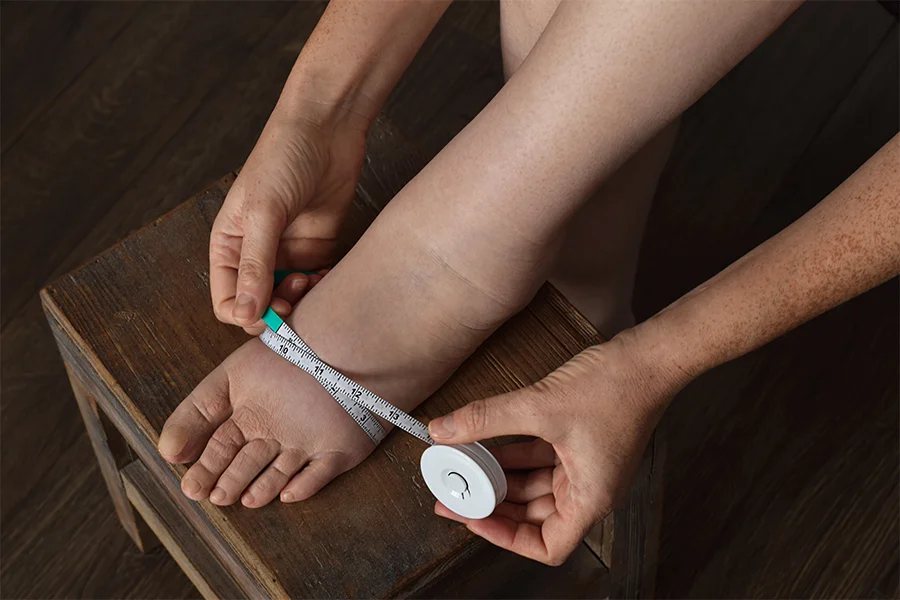
Lymphedema (lymphatic edema) is a chronic condition in which lymph can no longer be drained effectively and accumulates in the tissues, causing swelling of one or more limbs. Lymphedema of the lower limbs is common and can affect quality of life, especially when associated with varicose veins, venous thrombosis, or obesity.
For a complete understanding of how lymph circulates in the body, you can also read the page: Lymph and the lymphatic system: what they are and how they work.
Book an Appointment
What is lymphedema (lymphatic edema)?
Lymphedema is a form of chronic edema caused by damage to the lymphatic system, not by a heart, kidney, or strictly venous problem. In lymphedema, the lymph vessels or nodes can no longer transport lymph properly, and fluid accumulates in the tissues, especially in the arms or legs.
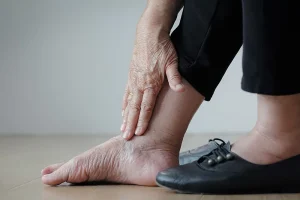
Lymphedema of the lower limbs is manifested by progressive swelling of the ankles, calves and sometimes thighs, and is often confused with “water retention” or venous edema. Correct evaluation of lymphedema is important to start treatment on time and prevent complications.
Types of lymphedema: primary and secondary
Primary lymphedema
Primary lymphedema occurs when the lymphatic system is affected from birth or develops abnormally without a clear external cause. It can begin in childhood, adolescence, or adulthood and manifests as gradual swelling of one or both lower limbs.
In primary lymphedema, lymphatic vessels may be too few, too narrow, or absent in certain areas, which explains the appearance of edema even in the absence of surgery or other obvious disease.
Secondary lymphedema
Secondary lymphedema is much more common and occurs when the lymphatic system is damaged, blocked, or overworked by other conditions. Causes include:
- Oncological surgery that removes lymph nodes (for example, in breast or gynecological cancer);
- Radiation therapy that affects lymph nodes and vessels;
- Tumors that compress or invade lymphatic pathways;
- Recurrent skin infections, such as cellulitis and erysipelas;
- Chronic venous disease and deep vein thrombosis, which overwork lymphatic drainage;
- Excess weight and obesity, which compress lymphatic vessels and reduce mobility.
For situations where lymphedema is associated with other vascular diseases, you can also learn more from the pages:
- Veno-lymphatic diseases (veins and lymph): when lymphedema is combined with chronic venous disease or thrombosis;
- Arterio-lymphatic diseases (arteries and lymph): when lymphedema occurs in patients with peripheral arterial disease;
- Lymphatic diseases associated with obesity (overweight): obesity-induced lymphedema.
Symptoms of lymphedema (lymphatic edema)
Early signs of lymphedema
Lymphedema of the lower limbs usually develops slowly, with subtle initial symptoms:
- A feeling of tension or heaviness in one or both legs;
- Mild swelling in the ankle or foot, more noticeable in the evening;
- Deeper marks left by socks or shoes;
- A feeling of “tight skin” or stiffness in the area of the edema.
At this stage, lymphedema can easily be confused with “tired legs” or venous edema, which is why specialist consultation is important.
Signs of chronic lymphedema
Without proper treatment, lymphedema becomes chronic and may present with:
- Persistent swelling that does not go away after rest or overnight;
- Thickening of the skin, a “cardboard” or bumpy appearance (orange peel);
- Skin discoloration, brown or reddish-brown areas;
- Episodes of local redness, pain, and fever, suggestive of infection.
In advanced stages, lymphedema can significantly limit mobility and lead to pain, ulcers, and an increased risk of severe infections.
Complications of lymphedema
Complications of lymphedema (lymphatic edema) include:
- Recurrent skin infections (cellulitis, erysipelas), which may require antibiotic treatment and hospitalization;
- Lymphangitis (inflammation of the lymphatic vessels) and, in severe cases, generalized infections;
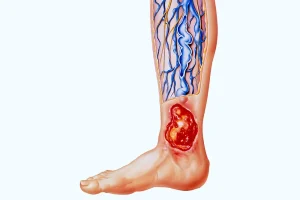
- Persistent ulcers and cracks in the skin, with risk of superinfection;
- Aesthetic and functional changes in the affected limb, including difficulty walking and wearing shoes;
- Significant impact on quality of life, including psychological component.
Preventing complications is a central goal of treatment for lower limb lymphedema.
Diagnosis in lymphedema (lymphatic edema)
Vascular surgery or angiology consultation
The diagnosis of lymphedema is based on a discussion with the patient, a clinical examination and the exclusion of other causes of edema. The first step is a consultation with a vascular surgeon or angiologist, who will analyze the medical history (including oncological interventions, varicose veins, thrombosis, obesity) and examine the affected limb.
The doctor decides whether the edema is predominantly lymphatic or whether there is also a venous, arterial, or systemic component, in which case additional evaluation of the veins, arteries, heart, or kidneys may be necessary.
Recommended investigations
There is no single “standard” test for lymphedema, but the following may be recommended:
- Venous and, if necessary, arterial Doppler ultrasound: to rule out venous thrombosis, chronic venous disease, or peripheral arterial disease;
- Blood tests and cardiological/nephrological evaluations to rule out other causes of generalized edema;
- In selected cases, imaging studies specific to the lymphatic system (lymphoscintigraphy, magnetic resonance imaging): where available.
Book an Appointment
Treatment for lymphedema (lymphatic edema)
General principles
Lymphedema (lymphatic edema) is usually a chronic condition, and treatment is aimed at controlling the edema, preventing complications, and improving the function of the affected limb. There is no “miracle treatment” that will completely cure lymphedema, but the right combination of methods can lead to significant improvements.
Compression therapy
Compression therapy is the mainstay in the treatment of lower limb lymphedema:
- Medical compression stockings, adapted to the measurements of the affected limb;
- Multilayer compression bandages, used in the decongestion phases;
- Special devices, in selected cases, upon the recommendation of the specialist.
Compression helps reduce limb volume, support lymphatic drainage, and prevent rapid recurrence of edema.
Lymphatic drainage and exercises
Manual lymphatic drainage and specific exercises complement compression therapy:
- Manual lymphatic drainage, performed by trained personnel, with gentle movements aimed at stimulating lymphatic flow;
- Exercises that activate the muscle pump (walking, ankle and knee movements) adapted to the patient’s condition;
- Combined physiotherapy programs for lymphedema, when available.
Skin care
Careful skin care is essential in lymphedema to prevent infections:
- Daily hygiene of the affected limb, with careful drying, especially between the fingers and in the folds;
- Moisturizing the skin with emollient creams to prevent cracks;
- Avoiding trauma, burns, pricking in the affected area;
- Prompt presentation to the doctor at the first signs of redness, pain, local heat or fever.
Lifestyle in lymphedema of the lower limbs
Certain lifestyle changes can help control lymphedema of the lower limbs:
- Maintaining or achieving a weight as close to normal as possible: excess weight worsens edema;
- Regular physical activity, adapted to the doctor’s recommendations (walking, swimming, cycling);
- Avoiding prolonged standing or sitting; taking breaks to move your ankles and raise your legs;
- Choosing comfortable shoes that do not compress excessively.
For patients with lymphedema and excess weight, additional information can also be found on the page Lymphatic diseases associated with obesity (overweight).
Our medical team
Frequently asked questions about lymphedema (lymphatic edema)
Is lymphedema the same as "water retention"?
No. “Water retention” is a general term, while lymphedema (lymphatic swelling) is a specific condition of the lymphatic system, with its own mechanisms and treatment.
Lymphedema of the lower extremities usually progresses slowly and can lead to skin changes and complications if left untreated.
Can lymphedema be cured permanently?
In most cases, lymphedema is a chronic condition that cannot be “cured” permanently, but it can be very well controlled with appropriate treatment. The goal is to reduce edema, prevent complications, and maintain an active life.
What is the difference between lymphedema and venous edema?
Venous edema is mainly caused by a problem with the veins (e.g. varicose veins, chronic venous insufficiency), while lymphedema is caused by damage to the lymphatic system.
The two can coexist (veno-lymphatic insufficiency), and in such cases both the page Veno-lymphatic disorders (veins and lymph) and specialist evaluation are useful.
Does lymphedema only occur after oncological surgeries?
No. Although secondary lymphedema after oncological interventions and radiotherapy is common, lymphedema can also occur after repeated infections, trauma, chronic venous disease, venous thrombosis or in the context of obesity.
Primary lymphedema can also occur without an obvious external cause.
Can I do sports if I have lymphedema of the lower limbs?
Physical activity is generally beneficial for patients with lymphedema, provided it is adapted and does not cause injury or overuse.
Exercises that activate the calf muscle pump (walking, swimming, cycling) and physiotherapy programs help with lymphatic drainage, especially when combined with compression therapy.
When should I urgently see a doctor if I have lymphedema?
Seek immediate medical attention if you experience sudden worsening of swelling, severe pain, redness, local warmth, fever, or the appearance of rapidly spreading wounds.
These signs may indicate an acute infection or other complication that requires prompt treatment.
When to request an evaluation for lymphedema (lymphatic edema) at the VenArt Clinic?
If you have persistent swelling of a limb, a feeling of heaviness, skin changes, or repeated episodes of infections in the area of the swelling, it is important to be evaluated for lymphedema (lymphatic edema).
You can schedule an appointment for a complete evaluation of lower limb lymphedema and to establish a treatment plan tailored to your situation.