Obesity-related lymphatic disorders: symptoms, causes and treatment
From heavy and swollen legs in overweight patients, to obesity-induced lymphedema, to the right time for a combined approach to weight and edema.
Contents
To understand the role of the lymphatic system in these obesity-related lymphatic disorders, please see: The lymph and the lymphatic system: what they are and how they work.
Book an Appointment
How does obesity affect the lymphatic system?
Obesity-induced lymphedema is a particular form of lymphedema and one of the most common obesity-related lymphatic conditions, in which obesity not only worsens pre-existing edema, but itself becomes a trigger for obesity-related lymphatic conditions. Over time, chronic leg swelling can lead to skin changes and serious complications if obesity-related lymphatic conditions are not treated in a timely manner.
Symptoms of obesity-related lymphatic disorders
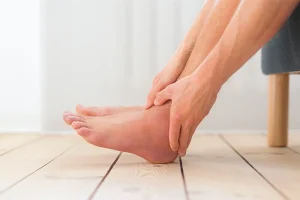
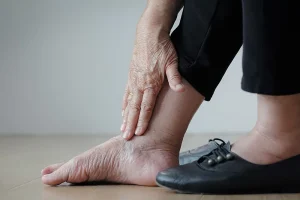
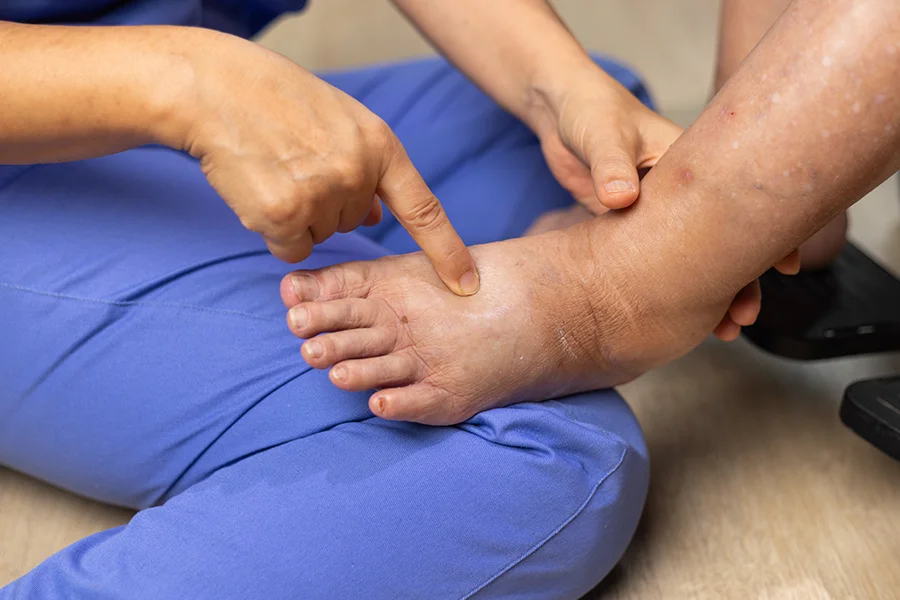
Heavy, swollen legs at the end of the day
Common symptoms of obesity-related lymphatic disorders include:
- Persistent oedema of the ankles and calves, particularly in the evening;
- A feeling of “heavy”, tired legs that makes walking and standing difficult;
- Deep imprints left on the skin by socks or shoes;
- Difficulty finding comfortable footwear because of the swelling.
In obesity-induced lymphedema, one of the most severe obesity-related lymphatic conditions, the edema is usually chronic and tends to progressively worsen if the excess weight is not addressed and the lymphatic condition is not properly treated. Early diagnosis of obesity-related lymphatic conditions is essential to prevent complications.
Skin changes and reduced mobility
Over time, obesity-related lymphatic disorders can lead to:
- Thickening of the skin, with a bumpy or “orange-peel” appearance;
- Areas of red, warm and painful skin suggesting infection (cellulitis, erysipelas);
- Reduced mobility due to the increased volume of the lower limbs;
- Difficulty maintaining hygiene, particularly within skin folds.
Complications of obesity-induced lymphoedema
Left untreated, obesity-related lymphatic disorders can lead to complications such as:
- Recurrent skin infections (cellulitis, erysipelas) on a background of chronic oedema;
- The formation of lymphatic cysts and lymphatic fistulae in areas of marked stasis;
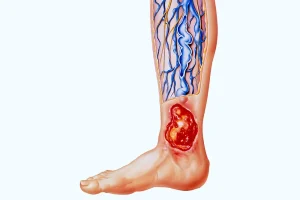
- Slow-healing leg ulcers;
- Lymphostatic papillomatosis (small skin outgrowths in oedematous areas).
Diagnosis of obesity-related lymphatic disorders
Vascular surgery and angiology consultation
The first step in managing obesity-related lymphatic disorders is a thorough assessment by a vascular surgeon or an angiologist in order to identify every possible cause of the oedema. The clinician will review the patient’s history of obesity, any associated conditions (venous disease, arterial disease, cardiac or renal disease) and carry out a clinical examination of the lower limbs to confirm the diagnosis of obesity-related lymphatic disorders.
The aim is to establish whether the oedema is predominantly lymphatic, venous, mixed or has systemic causes, and to decide whether the patient has obesity-induced lymphoedema or another form of lymphatic disorder. According to studies published on PubMed, severe obesity is recognised as an independent risk factor for secondary lymphoedema.
Recommended investigations
In assessing obesity-related lymphatic disorders, the clinician may recommend:
- Venous and/or arterial Doppler ultrasound: to assess venous and arterial circulation and rule out other causes of oedema;
- Blood tests (renal, hepatic and cardiac function, inflammatory markers): to identify systemic causes;
- In selected cases, imaging investigations or interdisciplinary consultations (cardiology, nephrology, endocrinology, nutrition).
Management of obesity-related lymphatic disorders
Weight loss and lifestyle change
Recommended measures:
- A tailored nutritional plan, ideally with the support of a dietitian;
- A gradual increase in physical activity, with joint-friendly exercise (walking, swimming, stationary cycling);
- Avoiding prolonged sedentary periods (taking movement breaks every 30 to 60 minutes).
International recommendations, such as those issued by the Mayo Clinic, highlight the importance of combining weight loss with careful skin care to prevent the complications of lymphatic disorders.
Compression therapy and lymphatic drainage
In patients with obesity-induced lymphoedema, compression therapy and lymphatic drainage play an important role in controlling oedema, in line with the official NHS treatment guidelines for lymphoedema:
- Compression stockings or bandages, adapted to the size and shape of the limbs and sometimes made to measure;
- Manual or mechanical lymphatic drainage carried out by trained therapists;
- Specific exercises that activate the muscle pump and support lymphatic drainage.
These interventions for obesity-related lymphatic disorders build on the recommendations already set out in our page The lymph and the lymphatic system, but are adapted to the reality of an overweight patient and to the specific features of obesity-related lymphatic disorders.
Book an Appointment
Skin care and infection prevention
In obesity-related lymphatic disorders, attentive skin care is essential, as skin folds and chronic oedema increase the risk of infection. Hygiene and prevention are an integral part of the management of obesity-related lymphatic disorders.
General recommendations for patients with obesity-related lymphatic disorders:
- Careful daily hygiene, with gentle drying of the skin, especially in the folds;
- Regular moisturising with emollient creams to prevent cracking;
- Protecting the lower limbs from injuries and scratches;
- Seeking prompt medical advice at the first signs of redness, local warmth or fever.
Our medical team
Frequently asked questions about obesity-related lymphatic disorders
What are obesity-related lymphatic disorders?
Obesity-related lymphatic disorders are situations in which excess body weight impairs the function of the lymphatic system and leads to the appearance or worsening of oedema in the lower limbs.
In some cases, obesity can trigger obesity-induced lymphoedema, a specific form of lymphoedema.
What is obesity-induced lymphoedema?
Obesity-induced lymphoedema is a condition in which obesity itself causes lymphatic system dysfunction, leading to a build-up of lymphatic fluid in the tissues. The swelling usually affects the legs, worsens gradually and requires long-term treatment.
Do all patients with obesity develop lymphatic disorders?
Not every patient with obesity develops obesity-related lymphatic disorders, but the risk of obesity-related lymphatic disorders rises with the degree of obesity and the length of time excess weight is carried. Some patients already have a latent lymphoedema, which weight gain turns into a manifest lymphoedema and marks the onset of obesity-related lymphatic disorders.
Can swollen legs go away simply by losing weight?
Weight loss can significantly improve lower-limb oedema in patients with obesity and reduces the pressure on the lymphatic vessels, making it an important part of the management of obesity-related lymphatic disorders. However, in established obesity-induced lymphoedema, weight loss on its own is rarely enough, and compression therapy, manual lymphatic drainage and careful skin care are usually needed as well.
How can I tell whether my swollen legs are due to obesity or to another cause?
Swollen legs can have many causes: obesity, venous disease, heart disease, kidney disease, primary or secondary lymphoedema, as well as obesity-related lymphatic disorders. A clinical examination by a vascular surgeon, together with Doppler ultrasound and blood tests, helps to clarify the diagnosis and to identify the predominant cause of the oedema.
Can obesity-induced lymphoedema be treated?
Obesity-induced lymphoedema cannot usually be fully reversed, but it can be controlled and significantly improved through an integrated programme that combines weight loss, compression therapy, lymphatic drainage, skin care and follow-up by a specialist team. The aim of treatment for obesity-related lymphatic disorders is to reduce oedema, prevent complications and improve mobility and quality of life.
When should I come for a consultation for obesity-related lymphatic disorders?
It is advisable to come for a consultation if you have persistent leg swelling, marked changes in the skin (thickening, redness, recurrent infections), pain or reduced mobility, especially in the context of being overweight or having known obesity. An early diagnosis of obesity-related lymphatic disorders helps to prevent complications and to start treatment in good time.
When to seek an assessment for obesity-related lymphatic disorders at VenArt Clinic
If you have had swollen legs for a long time, are carrying extra body weight, walking has become increasingly difficult and the skin over your calves and ankles is starting to change, you may be living with an obesity-related lymphatic disorder.
You can book an appointment for a thorough assessment of the oedema and lymphatic system, and to put together a treatment plan tailored to your situation.