Trigger Finger Treatment
Get rid of finger pain and numbness.
Conditions Treated
Hand
Foot

Are you having trouble bending or straightening a finger? Do you feel pain and a snapping sensation when you move it? These could be signs of trigger finger, a condition that can become increasingly bothersome if not treated in time.
Learn what causes this problem, how it can be diagnosed, and what treatment options are available to you to regain your mobility and comfort.
Book an Appointment
What is spring finger?
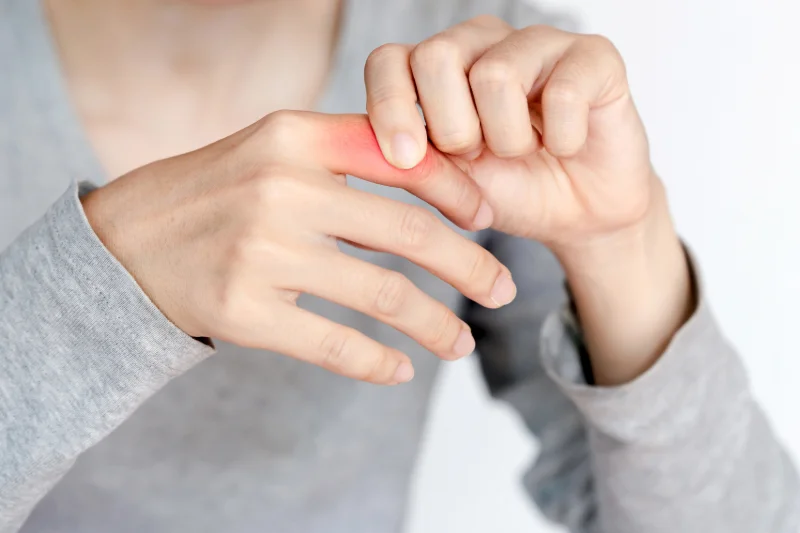
Trigger finger, also known as stenosing tenosynovitis, is a condition that causes a finger to become locked in a bent position, accompanied by pain and joint stiffness. It occurs due to inflammation of the tendon sheath, which prevents the tendon from sliding properly during flexion and extension.
If symptoms are not treated in time, the condition can lead to permanent damage to the tendon and loss of mobility of the affected finger.
Causes and risk factors of trigger finger
Trigger finger can have multiple causes, including:
- Overuse of joints through repetitive movements;
- Diabetes, rheumatoid arthritis, thyroid conditions;
- Activities that involve gripping and holding objects in the hand for long periods;
- Local trauma.
Women are more prone to this condition, and the age at which it most commonly occurs is between 50 and 60 years old.
Symptoms of spring finger
- Finger locked in a bent position;
- Pain and stiffness, especially in the morning;
- A snapping or “catching” sensation when moving;
- Painful lumps at the base of the affected finger.
Diagnosis of finger in spring
Diagnosis is generally clinical and involves a physical examination by an orthopedic doctor. In some cases, ultrasound may be recommended to assess the thickness of the tendon sheath and the severity of inflammation.
Price of finger surgery in the resort
The price for trigger finger surgery may vary depending on the complexity of each case. To provide you with an exact cost, we recommend that you contact us directly. This way, we can properly assess your situation and provide you with all the necessary details.
Treatment for stuck fingers
Non-surgical treatment of finger in spring
In the early stages, conservative treatment can be effective and includes:
- Rest and avoidance of repetitive activities;
- Wearing a brace to limit movement;
- Specific physical therapy exercises;
- Application of local heat and ultrasound therapy;
- Corticosteroid injections to reduce inflammation.
Finger surgery in spring
If symptoms persist and affect quality of life, surgery may be necessary to release the tendon. This can be done by:
- Percutaneous release: minimally invasive, with rapid recovery;
- Endoscopic intervention: involves small incisions and the use of an endoscope;
- Open surgery: the safest method for preventing recurrence.
Spring-loaded finger brace
The spring-loaded finger brace is designed to immobilize the affected finger to reduce inflammation and pain, preventing the finger from locking or snapping when moving. It is recommended to use the brace when symptoms such as pain, stiffness or locking occur when bending and extending the finger. The brace helps the tendon heal by limiting repetitive movements and provides support during the recovery period.
Finger surgery recovery in the spring
After orthopedic surgery, patients are encouraged to begin finger movement as soon as possible. A personalized recovery program may include:
- Kinesiotherapy and physiotherapy to restore mobility;
- Avoiding activities that overuse the hand for several weeks;
- Monitoring symptoms to prevent complications.
Exercises for the spring finger
To relieve trigger finger, you can try simple exercises: gently stretch the affected finger and hold the position for a few seconds, squeeze a soft ball in your palm, roll your fingers on a flat surface, and use an elastic band to strengthen the muscles. A gentle massage at the base of the finger can also help relax the tendon. If symptoms persist or worsen, consult a specialist.
Schedule a consultation at the VenArt Clinic
If you have symptoms, don’t wait for them to get worse! Schedule a consultation with a specialist and find out the best solution for the health of your hands.
Medical Team
Frequently Asked Questions about Trigger Finger
What is Trigger Finger?
Trigger finger is a condition in which a finger becomes stuck in a bent position and suddenly straightens, like a spring, due to inflammation of the tendon sheath.
What are the causes of Trigger Finger?
It can be caused by repetitive movements, conditions such as diabetes or rheumatoid arthritis, as well as overuse of the hand.
How do I recognize the symptoms of Trigger Finger?
Symptoms include pain at the base of the finger, a feeling of locking, a snapping sensation when moving, and difficulty straightening the finger.
How is the diagnosis made?
Diagnosis is clinical and based on physical examination of the affected finger. In some cases, ultrasound may be used for confirmation.
What treatment options are there?
Treatment can be conservative (rest, orthotics, physiotherapy, corticosteroid injections) or surgical, if symptoms persist.
How long does recovery take after surgical treatment?
Recovery varies between a few days and a few weeks, depending on the type of intervention and compliance with the recovery program.
Can I prevent Trigger Finger?
Avoiding repetitive movements, taking regular breaks from strenuous activities, and stretching exercises can help prevent the condition.